

Why language teachers need expertise now
Language teaching has changed dramatically. Learners now meet new languages through apps, videos, podcasts and online communities, so the teacher’s role is shifting from source of knowledge to guide. As a result, many teachers ask the same questions: Which online resources are actually worth using? How do we help learners study independently? Above all, how do we keep speaking and communication at the heart of the classroom?
We answer these questions from experience, not from theory alone. In fact, our language expertise rests on three decades of classroom practice, European cooperation and tested resources that anyone can use.
At a glance
Who we are: Erasmus Courses Croatia, run by Adult Education Centre Maksima, Split
Our roots: Pappagallo language school, founded in Split in 1989
Our focus: Language learning, language teaching, self-directed learning, drama-based methods
Next step: Join our language teacher training courses in Croatia

Our story: from Pappagallo to a European centre of expertise
It all started in 1989, when Pappagallo opened its doors as the first language school in Split. Over the years, the school grew with its city and its learners. Today, it remains the language school in Split that has stood the test of time.
Because we have taught languages every day for decades, we know what works in real classrooms. Moreover, we know what learners actually struggle with, from speaking anxiety to staying motivated. That is why our European projects always start from classroom practice rather than from trends.
Decades of teaching adults, young learners and professionals, in a city where languages meet tourism, culture and trade.
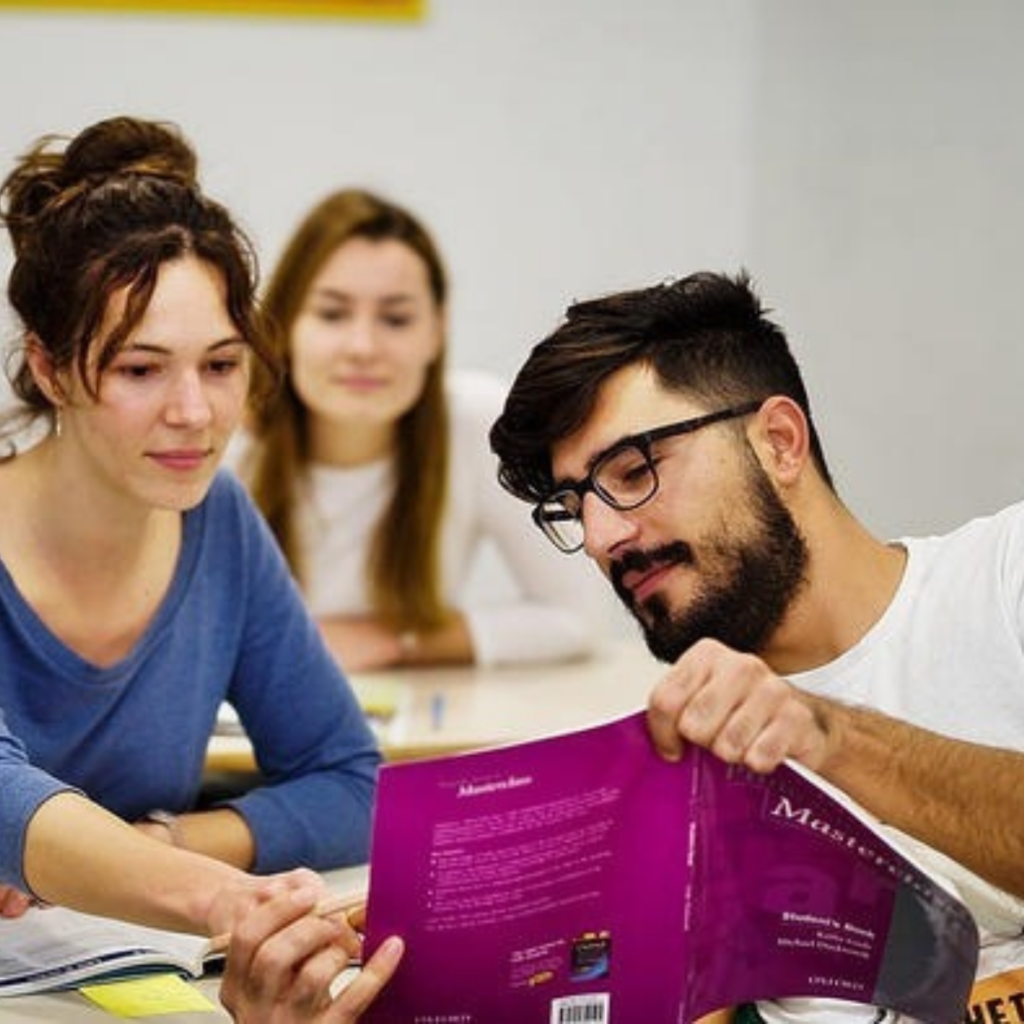
We focus on communication, confidence and motivation, so learners use the language rather than only study it.
We teach learners how to learn, so progress continues long after the course has ended.
Through Erasmus+, we exchange ideas with language schools, universities and innovation partners across Europe.
Proof of expertise: Erasmus+ LFLO project
Our expertise is anchored in the Erasmus+ project Learning Foreign Languages Online (LFLO), which ran from June 2021 to May 2023. Its aim was to make it easier for adult and self-directed learners to learn a foreign language online. After all, a foreign language is one of the most marketable skills for employment, and many people now study on their own.
To reach this goal, partners from the United Kingdom, Croatia, Spain, Greece and Poland developed two outputs. A team of language experts then assessed both of them.
7 languages
that educates adults about the signs, causes and consequences of burnout
40 hours
with educational materials, practical tools and videos
2 modules
to reinforce positive habits and track progress over time
5 partners
on stress management, resilience and healthy work habits
Output 1: A compilation of Open Educational Resources. First, the partners collected freely accessible, openly licensed online resources, such as grammar websites and podcasts. They then organised them by CEFR level and by skill: grammar, vocabulary, pronunciation, reading, writing, listening and speaking. In this way, learners can find the right material for their level within minutes. The collection covers English, Spanish, Italian, French, Polish, German and Croatian.
Output 2: An e-course on how to learn foreign languages online. Next, the partners created a 40-hour e-course that shows learners how to use the resources effectively. It has two modules:
- Best practices for self-directed learning: helps learners manage their own learning
- Best practices for foreign language learning: helps learners understand the different components of language learning
Consequently, learners become more self-sufficient and can keep improving with the materials available online. Both outputs are free to use.
Working with strong European partners
We do not work alone. Instead, our language projects bring together language schools, innovation organisations and technology institutes from several countries. Because of this mix, our work reflects what learners and teachers truly need.
1
Language schools
Partners such as Eurospeak Language Schools (UK, coordinator) and Escuela de idiomas Carlos V (Spain) bring daily teaching experience. Therefore, the resources are tested by people who teach every day.
2
Innovation and tech partners
Innovation Hive (Greece) and the Institute of New Technologies (Poland) keep the work grounded in what is usable online today. As a result, our resources stay practical rather than theoretical.
3
Adult education
As an adult education centre, we ensure that the voice of the self-directed adult learner is heard. In addition, we contribute the Croatian language to the collection.
More proof: the ACT project
Our language work goes beyond online learning. In the Erasmus+ ACT: Act, Communicate, Transcend project (2021–2023), which we coordinated, eight partners from six countries developed a drama-based speaking assessment rubric, training materials, an activity book and an e-learning platform. Overall, the project shows our belief that drama makes speaking more fun and more effective. Read more on our KA2 projects page.
Learn languages and teach them better with us
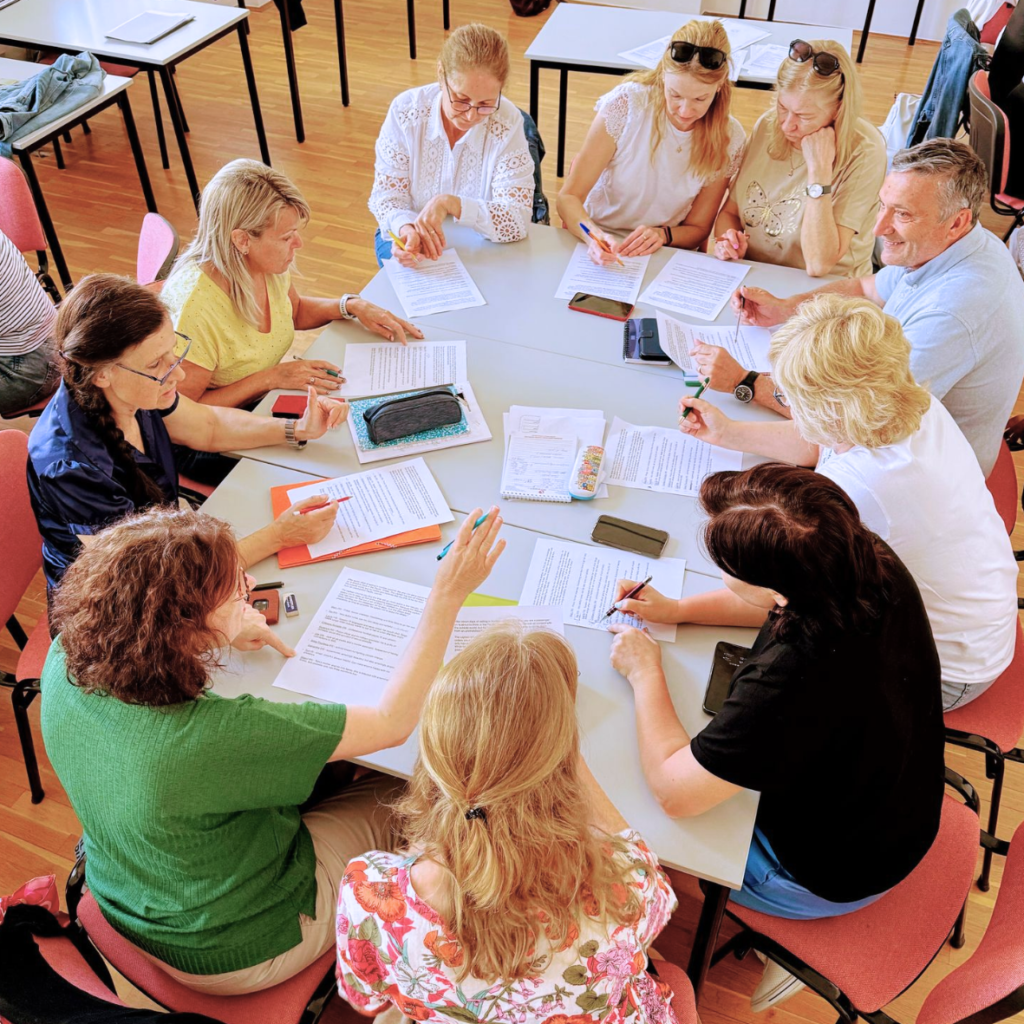
For many European teachers, our courses in Split offer more than methodology. They also give the chance to learn in a city where Croatian, Italian, English and many other languages are heard every day. In addition, participants meet colleagues from other countries and exchange ideas on teaching.
Read our Google reviews HERE.
Frequently asked questions about language learning and teaching
Most frequent questions and answers
Erasmus Courses Croatia (Adult Education Centre Maksima) began as Pappagallo language school in 1989, the first language school in Split. Since then, we have combined classroom teaching with European projects such as LFLO and ACT.
Learning Foreign Languages Online (LFLO) is an Erasmus+ project that helps adult and self-directed learners study a language online. It includes a collection of free resources in seven languages and a 40-hour e-course.
English, Spanish, Italian, French, Polish, German and Croatian. Furthermore, the resources are organised by CEFR level and by skill.
Yes. Both the resource compilation and the e-course are freely available on the project website.
Yes. Our courses are designed for teachers and school staff who use Erasmus+ mobility funding.
Develop your language teaching with us
Join our language teacher training courses in Croatia. That way, you bring practical, classroom-tested ideas back to your school.
Also see our work in AI in education and mental health and well-being. Co-funded by the European Union. Views and opinions expressed are those of the author(s) only and do not necessarily reflect those of the European Union or the European Education and Culture Executive Agency (EACEA).