Back

Erasmus+ Courses Croatia participants have the unique opportunity to combine professional development with the discovery of one of Europe’s most beautiful destinations. From the historic city of Split to the stunning Dalmatian coastline and islands, Croatia offers unforgettable cultural, natural, and educational experiences throughout the year. Magnificent Croatia, also known as the land of a thousand islands, welcomes visitors 365 days a year. Participants attending Erasmus+ Courses Croatia often fall in love with the country and promise to return with their families for a future holiday.

Our courses give you plenty of free time to get to know our beautiful city of Split and roam its streets every day, but if you choose to learn more about our country, you may also wish to explore unspoiled Mediterranean islands, visit Game of Thrones filming locations, discover nearby towns and cities, enjoy local delicacies, or take a swim in the crystal-clear sea.

Split

Situated right in the middle of Dalmatia’s most enchanting region, Split is a city where history speaks from every corner—a city with a Mediterranean soul, a warm heart, and a modern vibe.

Songs and poems written here talk about the sea, the sun, stone, wine, music, olives, family, and love. They paint a picture of a city that grew out of a Roman palace and, even now, centuries later, still lives at the speed of a heartbeat. As locals like to explain—pomalo—meaning “take it easy”: enjoy life, breathe, don’t stress, and notice how beautiful the world is.

The story of Split takes us back 1,700 years, when the Roman emperor Diocletian, tired of wars and court intrigues, decided to return to his homeland and build a majestic palace where he would spend his final years. It took 10 years (AD 295–305) to build the palace, which was adorned with Corinthian columns, a mausoleum (now the cathedral), the Temple of Jupiter, impressive cellars, and a private thermal spa intended to soothe the old warrior’s wounds and rheumatic pain.


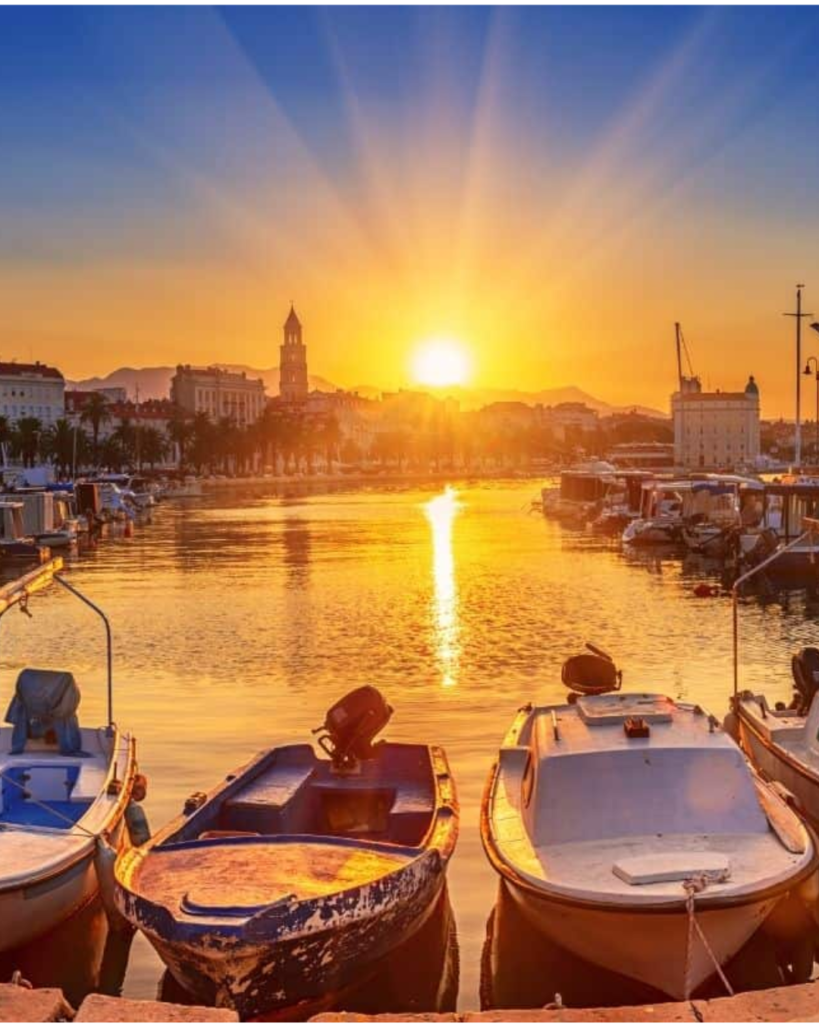
Erasmus+ KA1 courses in Split, Croatia: The historic Riva promenade featuring palm trees, boats, and the iconic Saint Domnius Cathedral bell tower.


Over the following centuries, the palace gradually evolved into a city that continues to captivate visitors with its rich traditions, fascinating history, and remarkable natural and cultural heritage. Diocletian’s Palace and the historic centre of Split have been listed as a UNESCO World Heritage Site since 1979. This recognition is due not only to the exceptional preservation of the Palace, but also to the fact that it remains a living monument. Over time, it has been transformed into a vibrant network of houses, residences, churches, and chapels by the generations of people who settled within its walls after Diocletian’s era. Today, every historical layer—from Ancient Rome through the Middle Ages to the present day—remains visible, creating a unique blend of history and everyday life.

Split is much more than glorious architectural scenery. It is also renowned for its excellent gastronomic and wine experiences, numerous cultural events such as film and theatre festivals, exhibitions, museums, and concerts. The city offers a wide variety of entertainment, ranging from lively clubs and bars to colourful street festivals. Every year, the Ultra Europe Festival attracts up to 100,000 young people from more than 100 countries worldwide. With its seafront cafés, ancient alleyways, palm trees, and parks, this vibrant and energetic city is one of the Mediterranean’s most compelling destinations.


Erasmus+ KA1 courses in Split, Croatia: Panoramic view of the historic old town, Riva promenade, and coastal harbor under a clear blue sky.


Our Teacher Training Centre enjoys an ideal location, just a short 5-minute walk from both Split’s vibrant city centre and the beautiful Marjan Forest Park with its beaches. This unique setting allows you to enjoy the very best of both nature and city life. Whether you choose to spend your afternoons exploring scenic forest trails and relaxing by the sea, or soaking up the lively atmosphere of the city’s streets, cafés, and waterfront, Split is ready to show you why locals proudly say that there is “no place like Split”.

Other highlights of Split include:

Peristyle Peristyle is a picturesque ancient Roman square located in the heart of Diocletian’s Palace. Originally the courtyard of the Roman emperor, it is now a popular gathering place where visitors and locals alike can meet friends, relax, and explore the rich history of this beautiful coastal city.

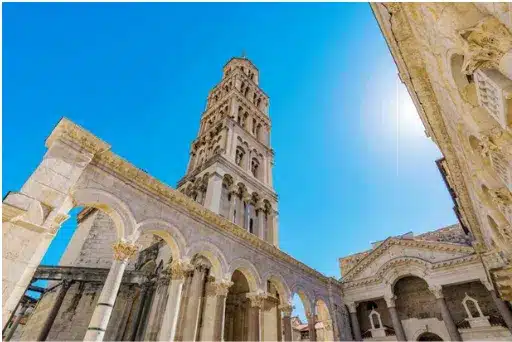
Erasmus+ KA1 courses in Split, Croatia: Cultural heritage and teacher training mobilities featuring the iconic Roman architecture of Diocletian's Palace Peristyle square.


Riva promenade As Split’s vibrant waterfront promenade, Riva is the lively heart of the city. Lined with palm trees, cafés, and historic buildings, it is the ideal place to enjoy a coffee in the sun, take a relaxing stroll, and soak up beautiful views of the Adriatic Sea.

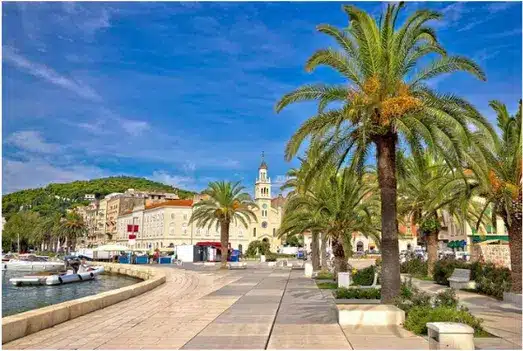
An elevated view of the sunny Riva promenade in Split, Croatia—a dynamic Mediterranean environment where teachers and educators connect during Erasmus+ KA1 training courses.


Green Market This is where you can experience everyday life in Split and feel like one of the locals. The colourful open-air market offers a taste of seasonal produce from many local farms in the surrounding area.

Erasmus+ KA1 courses in Split, Croatia: Immerse in local culture at the traditional open-air green market featuring fresh, seasonal Mediterranean produce.


Marjan Hill — Marjan is one of the symbols of Split, renowned as a peaceful natural oasis just a short distance from the city centre. The hill is criss-crossed with scenic trails winding through fragrant pine forests and leading to hidden gems such as medieval chapels, cave dwellings, and spectacular viewpoints offering breathtaking views of Split and the surrounding coastline. Explore Marjan on foot or rent a mountain bike from one of the many rental agencies in town. You can also discover secluded beaches, such as Bene Beach, where you can swim in crystal-clear waters and relax in the shade of the pine trees.

The crystal-clear turquoise waters and rocky coastline of Marjan Forest Park in Split—showing the beautiful Mediterranean nature Erasmus+ KA1 participants can enjoy during their time with us.


Sustipan Sustipan was once one of the most beautiful cemeteries in Croatia, built in the 19th century next to a Benedictine monastery. It was demolished a century later and transformed into a lovely forest park, situated in close proximity to the city centre and Marjan Hill. The park’s cliff edges offer fantastic views of Split, as well as the deep blue sea and the islands in front of the city. There are many benches and plenty of open space where you can sit back and enjoy nature.

The stone pavilion and pine trees at Sustipan Park in Split, used as an inspiring outdoor classroom setting for interactive Erasmus+ KA1 courses.


Kašjuni Kašjuni Beach is one of many amazing beaches in Split, alongside Bačvice Beach and Žnjan Beach. This relatively peaceful beach is a great place to unwind and soak up the summer sun, while enjoying a coffee or a cocktail from one of the nearby beach bars.

An aerial view of Kasjuni Beach in Split, featuring a sailboat in crystal-clear blue waters—a perfect coastal spot for Erasmus+ KA1 participants to relax after training sessions.


Ivan Meštrović Gallery  This unique art museum houses a comprehensive collection of works by one of Croatia’s most significant sculptors, Ivan Meštrović. The gallery itself is a work of art, surrounded by a beautiful Mediterranean garden filled with Meštrović’s bronze sculptures and overlooking the sea.

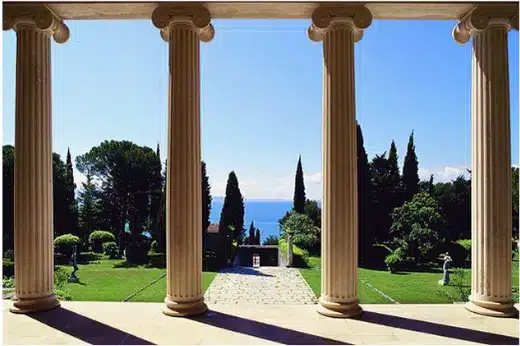
View through the grand classical columns of the Meštrović Gallery in Split, looking out over a lush green garden towards the Adriatic Sea—an inspiring cultural site for Erasmus+ KA1 participants.

Brač

Surrounded by incredibly clear waters, Croatian islands are easily reachable via frequent ferry services or catamarans that operate year-round. Our Social Program includes a summer visit to the beautiful island of Brač, the third-largest of Croatia’s islands. The ferry takes us to the port of Supetar, a former fishing village with shallow, pebbly beaches. Our next stop is the picturesque town of Bol, home to the spectacular 400-metre-long beach of Zlatni Rat (Golden Horn), famously and frequently reshaped by strong winds and sea currents. On our way back to Supetar for lunch, we drive across the island, passing olive groves, vineyards, and orange trees, and stop at the highest point of the island – Vidova Gora – where we enjoy one of the most beautiful viewpoints in the Adriatic. The remaining time is perfect for swimming or relaxing in one of the beach bars in Supetar before our return to Split.

An aerial view of the famous Zlatni Rat beach in Bol on Brač island—a breathtaking destination for cultural day trips and weekend excursions during Erasmus+ KA1 courses in Split.

Trogir

Our winter Social Program is perfect for exploring the towns of Trogir, Primošten, and Šibenik. Trogir is a charming town situated only 20 kilometres west of Split, and it is easily reached on a day trip. Its old town and entire historic centre are a UNESCO World Heritage Site, preserving many beautiful buildings from its period of glory and featuring a cathedral dating back to the 13th century. While its cobbled alleys are bustling with life in the summer, winter days are much quieter. Take a stroll along the wide seaside promenade lined with bars, cafés, and yachts, or enjoy a drink and explore the town on your own, discovering hidden courtyards filled with flowers and history.

Looking through the historic South Gate of Trogir out toward the sunny promenade—a beautiful UNESCO World Heritage site visited during cultural excursions on our Erasmus+ KA1 courses in Split.

Primošten

The peninsula town of Primošten, situated 28 km south of Šibenik, was once an islet just off the coast. Its true Mediterranean soul is revealed through narrow little alleys that lead you up the hill to St George’s Church, where you can watch an amazing sunset and admire stunning views of the surrounding islands and islets.

Top-down aerial view of the beautiful peninsula town of Primošten—a popular coastal destination for weekend trips and cultural discovery during Erasmus+ KA1 training courses in Split.


Šibenik

Šibenik’s ancient centre offers a blend of Mediterranean architecture and beautiful beaches. Dominated by the Gothic-Renaissance Cathedral of St James, one of the finest architectural monuments in the Adriatic, the old town is a maze of alleys, steps, and arches. Šibenik’s main street leads directly to the cathedral, a true masterpiece dating back to the 15th century. The city is very much alive, with locals often sitting on stools outside their homes, and its narrow streets remaining busy even during winter.

A high-angle view of the historic stone Cathedral of St. James in Šibenik, Croatia, surrounded by old town buildings with orange rooftops and the blue sea in the background.

Zadar

Zadar, the ancient capital of Dalmatia, is a perfect city for a day trip. Its seductive combination of ancient and medieval heritage, along with a lively café culture and striking architectural installations such as the Sea Organ and the Greeting to the Sun, gives the city a truly unique atmosphere. The Sea Organ (Morske orgulje) is the first installation of its kind in the world. It consists of a broad stone staircase descending into the sea, with underwater pipes that produce musical tones as waves move through them. The Greeting to the Sun (Pozdrav suncu) is a circular installation of solar-powered glass panels that absorb sunlight during the day and emit colourful light displays at night.

The ancient Roman Forum and illuminated Church of St. Donatus in Zadar at twilight—a historic destination for cultural day trips during our Erasmus+ KA1 courses in Split.

Krka National Park

If you would like to explore one of Croatia’s most beautiful national parks – Krka National Park, located inland from Šibenik – you will find yourself enchanted by its landscape of lakes, waterfalls, and canyons. The river Krka flows through the canyon, forming the impressive Skradinski Buk terraced waterfall. In summer, the cool river offers refreshment on warm, sunny days, while in winter visitors can enjoy the stunning scenery as well as visit the Franciscan monastery on the island of Visovac. Let’s not forget the incredible cuisine based on Mediterranean ingredients with a modern twist. Local delicacies can be found on every corner in Split. Fresh fish, olive oil, various types of wine, excellent regional cooking, and specialty dishes are just some of the reasons why you should choose Croatia as your next travel destination.

A scenic landscape view of multilevel waterfalls flowing into a clear green river pool, surrounded by a dense, lush green forest under a partly cloudy blue sky.


×
X