
Discover Porto: Erasmus+ Courses in Northern Portugal
Portugal’s second city on the Douro
Portugal’s second city on the Douro
About Porto, Portugal
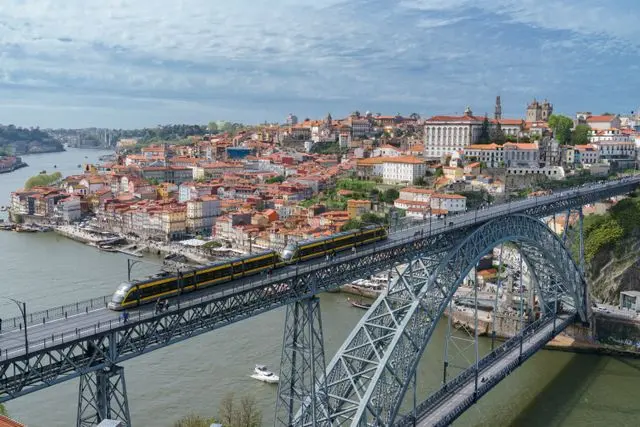
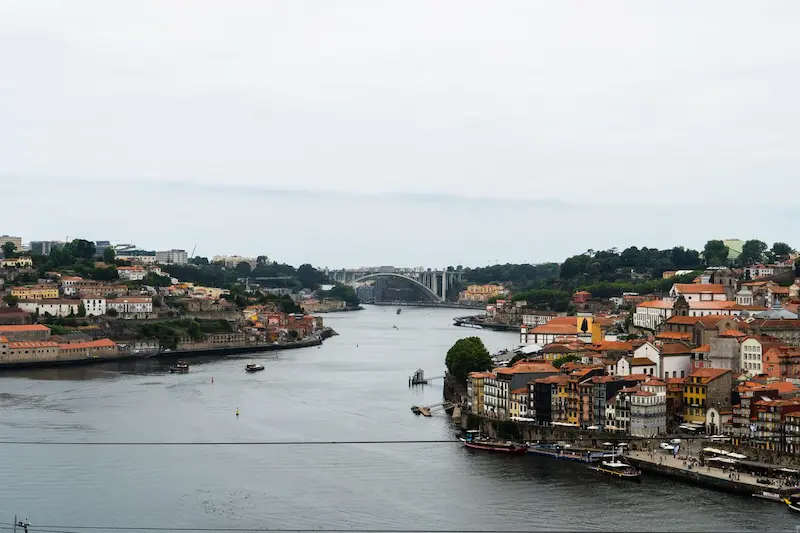
Porto is the second-largest city in Portugal, with about 230,000 residents in the city itself and around 1.7 million in the wider metropolitan area. It sits on the north bank of the Douro River, a few kilometres from the point where the river reaches the Atlantic. The old town drops steeply from the hilltops to the waterfront at Ribeira. The historic centre, together with the Dom Luís I Bridge and the Monastery of Serra do Pilar, has been a UNESCO World Heritage site since 1996.
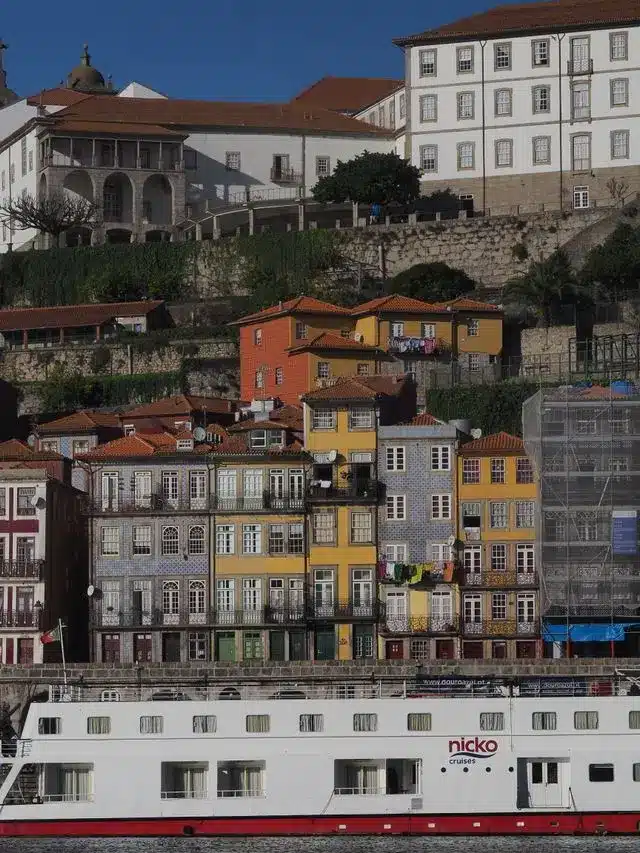
Porto looks different from Lisbon: greyer, more compact and more granite. Many buildings are covered in azulejo tiles, and you will see them on churches, station walls and ordinary apartment blocks. The city gave its name to port wine, although the wine is aged across the river in Vila Nova de Gaia, where the cellars are. Today Porto is also a university city with a good food scene, small independent shops and a growing tech sector, so it feels lived-in rather than built for visitors.
Why Porto works well for an Erasmus+ course
Why Porto works well for an Erasmus+ course
Porto is easy to manage. The airport is about 11 km from the centre and has a direct metro line, and most of the main sights are within a 20 to 30 minute walk of each other. The hills are the only real effort. If you are still choosing a programme, you can browse our Erasmus+ courses in Porto.
It suits people who like to walk, look at buildings and eat well. Porto has fewer big headline attractions than Lisbon and more small things worth stopping for: bookshops, tile-covered churches, covered markets and cafés on the river. English is widely spoken in the places visitors use.
The climate is cooler and wetter than Lisbon’s. From October to April you should expect rain and pack for it, while May to September is pleasant and mostly dry. A rainy day is not a problem in Porto, because there is plenty to do indoors: cellars, museums, the stock exchange palace and the market.
Top things to see and do in Porto
Livraria Lello and Rua de Santa Catarina: Livraria Lello opened in 1906 and is known for its red staircase and carved wooden ceiling. You need a ticket, and the usual way is to book a time slot online through the official website. Queues start before opening, so choose an early slot. Afterwards, walk up Rua de Santa Catarina, Porto’s main shopping street, and stop at Café Majestic if you want to see a classic Belle Époque café.
Palácio da Bolsa and Mercado do Bolhão: The Palácio da Bolsa is the 19th-century stock exchange, and the Arab Room inside is the highlight. It is visited on guided tours, so check the times for your day. The Mercado do Bolhão is the city’s main fresh food market and a good place for fruit, cheese, bread and flowers.
Serralves and Foz do Douro: The Serralves Foundation has a contemporary art museum, an Art Deco villa and a large park, and it is a calm break from the old town. Foz do Douro, where the river meets the sea, has a beach promenade, small cafés and fish restaurants. Tram line 1 runs along the river from Infante towards Foz and is mainly a tourist ride.
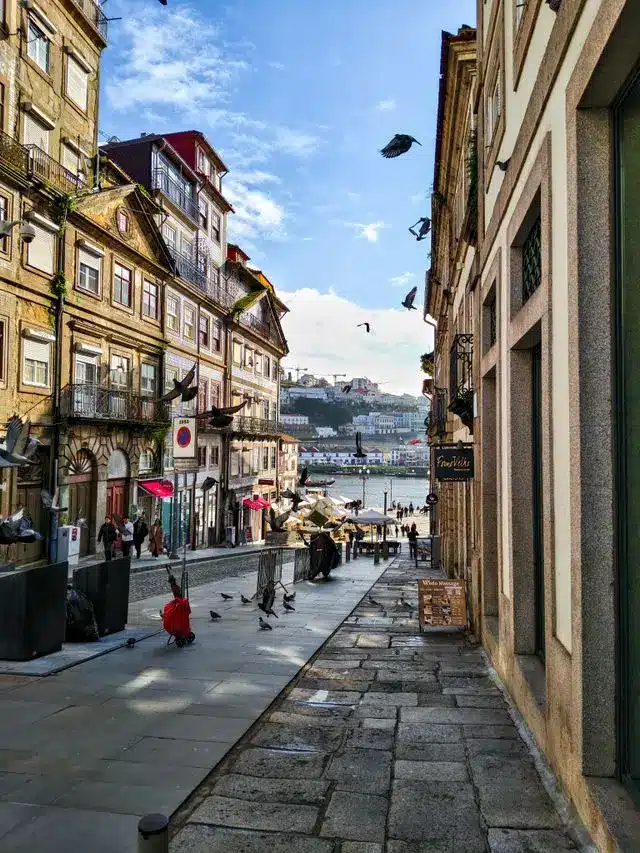
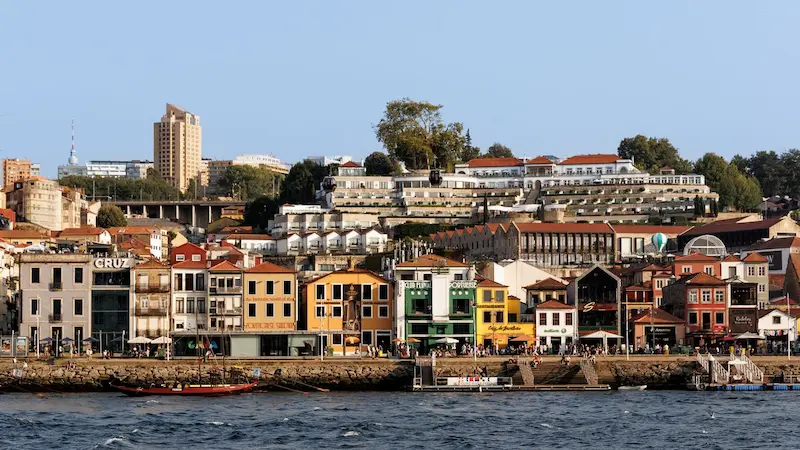
Ribeira and the Douro waterfront: Ribeira is the old riverside quarter, with narrow streets, cafés along the quay and the Dom Luís I Bridge rising above it. It is busiest at midday and around sunset, so go in the morning if you want it quiet. You can walk across the bridge: the lower deck takes about 10 minutes and puts you in Vila Nova de Gaia, and the upper deck is higher and gives better views.
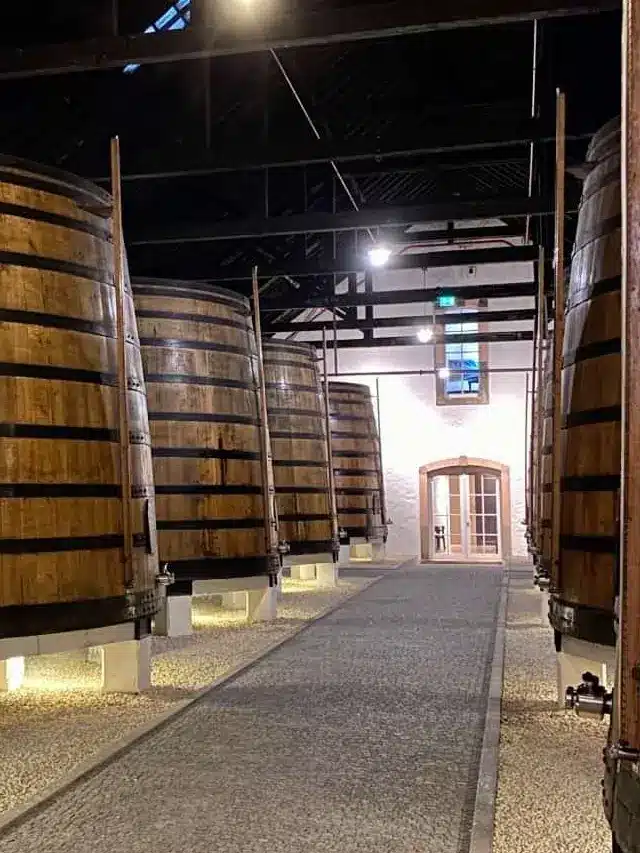
Port cellars in Vila Nova de Gaia: The port lodges are on the south bank, and most of the big names (Graham’s, Taylor’s, Sandeman, Cálem) offer guided tours with a tasting. Book ahead in busy periods. The climb from the quay is steep, but a cable car links the waterfront with the top of the hill, near the upper deck of the bridge.
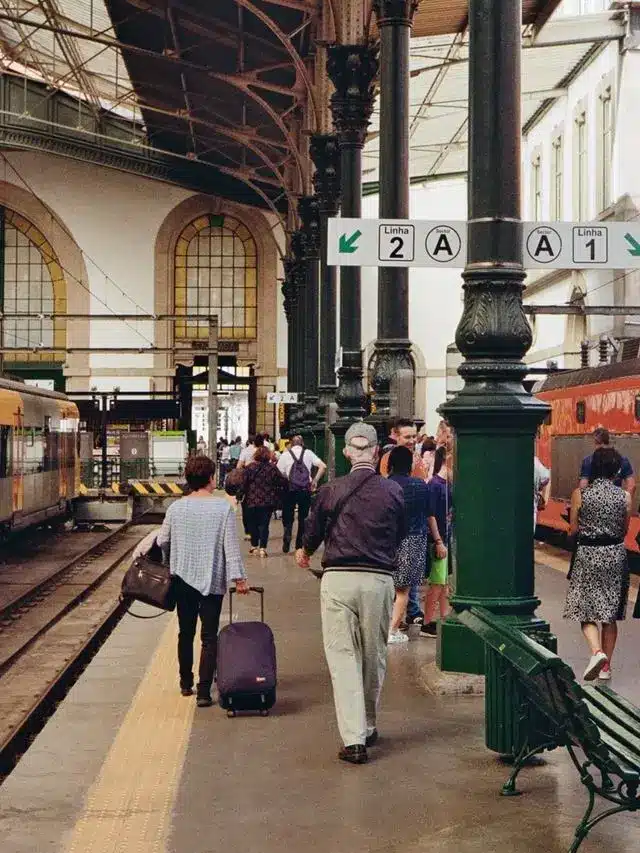
São Bento Station, the Cathedral and Clérigos: São Bento is a working station, and its entrance hall is covered in around 20,000 azulejo tiles showing scenes from Portuguese history. The Cathedral (Sé) is a short walk uphill and has wide views over the roofs. The Clérigos Tower, a baroque landmark about 75 m tall, is reached by roughly 225 steps and gives the best view of the city.
Surroundings & Trips
Douro Valley: The Alto Douro wine region is a UNESCO World Heritage landscape of terraced vineyards that follow the river inland. Trains run along the valley from Porto towards Régua and Pinhão, and the journey to Pinhão takes about two to two and a half hours. Many people join a guided day trip with a wine estate visit and a boat ride instead. The grape harvest in September and October is a good time to go.
Guimarães: Guimarães is about an hour from Porto by train and is often called the birthplace of Portugal. The historic centre is a UNESCO World Heritage site, and the main sights are the castle, the Palace of the Dukes of Braganza and the old squares, all within walking distance of each other.
Braga: Braga is also about an hour away by train and is one of the oldest cities in Portugal. Visit the cathedral and the sanctuary of Bom Jesus do Monte, with its baroque staircase, which is a UNESCO World Heritage site. You can climb the stairs or take the funicular.
Aveiro: Aveiro is about an hour south of Porto by train. It has canals with colourful moliceiro boats, Art Nouveau houses and a local sweet called ovos moles. A short bus ride takes you to Costa Nova, known for its striped beach houses.
If you have a free weekend, Coimbra and its old university are about an hour and a quarter by train, Peneda-Gerês National Park is easiest by car, and Lisbon is about three hours by train.
How to reach Porto, Portugal?
Porto Francisco Sá Carneiro Airport (OPO) is the main gateway, about 11 km north-west of the centre. Direct flights connect Porto with many European cities, so in many cases you can fly in without changing planes.
From the airport to the city
- Metro: Line E (violet) runs from the airport to Trindade in about 25 to 30 minutes, with no change needed. You need a rechargeable Andante card and a ticket for the airport zone, both sold at the ticket machines in the station. Validate your ticket at the yellow machine on the platform before you board.
- Taxi or ride-hailing: A taxi takes about 25 minutes without traffic. Uber and Bolt also operate at the airport, and either option works well for a group sharing the ride.
- Bus: STCP city buses serve the airport, but they are slower and less direct than the metro.
By train
Campanhã is the main long-distance station, and trains from Lisbon take about three hours. São Bento, in the centre, handles regional and suburban trains, and the two stations are a few minutes apart by train or metro.
What is the weather like in Porto?
Porto has a mild Atlantic climate, cooler and wetter than Lisbon’s. Winter highs are around 14 °C, and it rains on roughly half the days in December and January. Summers are warm and mostly dry, with highs around 25 to 27 °C. July is the driest month.
- Spring (March to May): changeable, with highs of about 15 to 20 °C and frequent showers. The city is green, and the weather improves through May.
- Summer (June to September): warm and mostly dry, with a cooler sea breeze at the coast. It can be much hotter inland, and the Douro Valley can pass 35 °C. The São João festival on the night of 23 to 24 June is Porto’s biggest street party, with music, fireworks and people tapping each other on the head with plastic hammers.
- Autumn (October to November): still mild in October, with highs around 20 °C, but rain returns and November is wet.
- Winter (December to February): mild but rainy and often windy, with highs of 12 to 15 °C. Frost is rare. Bring a waterproof jacket and shoes that grip.
Whatever the month, pack layers and something waterproof. Weather changes quickly on this part of the coast.
Frequently asked questions about Porto
Yes. Porto has an airport with a direct metro line to the centre, a compact historic centre you can mostly cover on foot, English spoken in most hotels and restaurants, and good food. The Douro Valley, Guimarães, Braga and Aveiro are all within about two and a half hours by train.
Take Metro Line E (violet) from the airport. It runs directly to Trindade in about 25 to 30 minutes, with no change needed. Buy a rechargeable Andante card and a ticket from the machines in the station, and validate it before you board. A taxi takes around 25 minutes without traffic, and Uber and Bolt also operate.
*prices might change in the meantime
Walk in the historic centre, and use the metro for longer distances. The metro has six lines that meet at Trindade and runs from early morning until after midnight. Buses and trains use the same Andante card. Expect steep hills and cobbled streets, so wear comfortable shoes.
Porto has a mild Atlantic climate that is cooler and wetter than Lisbon’s. Winter highs are around 14 °C, and it rains on roughly half the days in December and January. Summers are warm and mostly dry, with highs around 25 to 27 °C. July is the driest month.
Two full days cover the main sights: one for Ribeira, the bridge and the port cellars, and one for São Bento, Clérigos, Livraria Lello and the Bolhão market. Add a third day for Foz do Douro or Serralves, and a fourth for a trip to the Douro Valley, Guimarães or Aveiro.
Porto is generally very safe. Pickpocketing happens in crowded places such as Ribeira, around São Bento station and on the metro at busy times, so keep your phone and wallet in a zipped bag or inside pocket. The emergency number is 112.
Yes. You can usually manage in English in hotels, restaurants, shops and on public transport. In small local cafés a few Portuguese words help: bom dia (good morning), por favor (please) and obrigado or obrigada (thank you, said by a man or a woman).
The most popular are the Douro Valley (about two to two and a half hours by train to Pinhão), Guimarães and Braga (each about an hour by train) and Aveiro (about an hour by train). Each one works as a day trip by public transport.
Yes. Porto charges a small municipal tourist tax per person per night, collected by your hotel or host. Ask your accommodation whether it is already included in the price when you book.