AI in the Classroom in 2027: New Tools, New Rules, and How to Stay Ahead
By Erasmus+ Courses Croatia
As we head into 2027, the conversation about AI in education has changed. The question is no longer whether teachers and schools should use it, but how to use it well and safely. New tools appear almost every month, regulation is catching up, and teachers are expected to make sensible decisions about both. This post gives you a practical overview of the tools teachers loved in 2026, the trends shaping the year ahead, a few classroom ideas you can try right away, and the safety and legal points worth keeping in mind.
Five AI tools teachers loved in 2026
If you are looking for a place to start, these five tools came up again and again among teachers last year. Each one saves time on a different part of the job, so you can pick the one that matches your biggest daily challenge.
1. Magic School AI. A teacher-focused platform with dozens of ready-made tools for lesson plans, rubrics, exit tickets, differentiated texts and parent emails. It has a free tier, so you can test it on a real planning task before deciding whether it suits your workflow.
2. Brisk Teaching. A browser extension that brings AI into Google Docs, Slides and Classroom, where you already work. It can give feedback on student writing or adapt a text to a different reading level, which makes it a good fit for busy marking weeks.
3. NotebookLM. Upload your own materials, such as textbook chapters, articles or your lesson notes, and generate study guides, summaries, quizzes or audio overviews based only on those sources. Because it stays within what you give it, it is a safer choice when accuracy matters.
4. Canva AI. Turn a simple prompt into presentations, worksheets and posters, then edit them in seconds. It is ideal for teachers who want polished, engaging materials without spending an evening on design.
5. Gemini in Google Classroom. Google’s AI assistant is now built directly into Classroom. You can use it to research new topics, summarize sources, draft explanations or lesson ideas, and assign and review work without leaving the platform, although your school administrator controls who has access.
Trends to watch in 2027
Several trends are likely to define the year. AI tutors will offer personalised, guided support for students, while the teacher remains the one who sets the learning direction. Teachers will increasingly act as AI designers, using authoring tools that help them draft lessons, questions and practice simulations, which they then review, edit and approve, so professional judgement stays at the centre of the process. AI literacy is also becoming a core skill, for students and teachers alike, and UNESCO’s AI Competence Framework for Teachers is a useful reference point for anyone who wants to understand what that skill set looks like in practice.
The most important trend may be a return to pedagogy over gadgets. Research suggests that AI only improves learning when clear teaching principles guide it; otherwise it may simply help students finish tasks without learning any more than before. In other words, the value of a tool depends far less on how impressive it is than on how thoughtfully it is used in the lesson.
New tools we recommend trying in 2027
The tools above are already well established, so here are five newer options that work well for European teachers, three of them built in Europe and two Google features that are available to schools in the EU. As always, check with your school’s data protection officer before using any tool with students.
1. AIS.chat. This AI chatbot was developed for German schools on behalf of all the federal states, first as “telli” in autumn 2025 and under its new name since May 2026. Teachers can use it to prepare lessons, create materials, analyse texts and build their own AI assistants, and they can share a chat or assistant with a learning group through a QR code. It is free, complies with the GDPR and is reached through the state school portals, so it is mainly relevant if you teach in Germany, but it shows where publicly provided school AI is going.
2. Le Chat by Mistral AI. Le Chat is the AI assistant from the French company Mistral AI, and it has been moving into education over the past year, with French universities and the University of Groningen among the institutions piloting it. It has a free tier, runs on European infrastructure and is designed around GDPR requirements, which makes it a natural option for lesson ideas, summaries and drafting when your school prefers a European provider. Even so, keep student data and assessment results out of it unless your school has approved that use.
3. Fobizz. Fobizz is a Hamburg-based platform with more than 20 AI tools made for teachers, including an AI chat, a worksheet assistant, a grading assistant, audio transcription and the option to build your own assistants. It runs on European servers, lets students work anonymously and has a free basic licence, so it is a practical way to try AI with a class while keeping data protection in view. Fobizz has been around for several years, but its AI toolbox keeps growing and is still new to many teachers.
Two new Google features for schools using Google Workspace for Education
If your school already works in Google Classroom, two 2026 additions are worth a look. The Classroom app in Gemini was introduced in June 2026 and lets teachers ask Gemini questions that use their real class context, for example which assignments had the lowest scores, without pasting information in by hand. It is available globally in English to users over 18 once an administrator has enabled Gemini and connected apps, and nothing it creates is shared with students automatically. Teacher-led AI activities in Google Classroom bring Guided Learning, study notebooks in Gemini and NotebookLM into Classroom in a way that keeps the teacher in charge of what students do, and they add an insights view with a summary of each student’s activity. These features are rolling out in stages, so ask your school administrator what is already switched on for you.
Classroom ideas you can try this week
You do not need a big project to start working with AI in a meaningful way. One simple idea is to ask AI for three different ways to explain the same concept and then choose the best one for your class, which turns the tool into a source of options while you stay in charge of the final decision. Another is to let students “fact-check the chatbot” by finding and correcting errors in an AI-generated answer, an activity that builds critical thinking and shows learners first-hand that confident-sounding text can still be wrong.
AI is also useful for inclusion and differentiation, since you can generate the same text at several reading levels, or in a student’s home language, so that more learners can take part in the same lesson. Finally, it is worth teaching prompting as a skill in its own right, because asking a good question is part of digital literacy, and students who learn to be clear and specific will get far more out of any tool they use later.
Safety is now a priority
Teachers are right to be cautious. The OECD reports that most lower secondary teachers worry AI could harm academic integrity, and regulation is starting to respond to concerns like these. The EU AI Act is being rolled out in stages: emotion recognition in education is already prohibited, chatbot transparency rules apply from August 2026, and stricter rules for high-risk uses in education, such as AI-based assessment and admissions, are due in December 2027. Schools and teachers who build good habits now will be much better prepared when those rules take full effect.
IMPORTANT: In day-to-day practice, a few principles go a long way. Protect student data by never entering names, grades or personal details into tools your school has not approved. Keep a human in the loop: AI can draft feedback, but teachers make the decisions about grades and consequences. Verify everything, because AI can sound confident and still be wrong. Be transparent by telling students and parents when and how AI is used, and agree on clear rules for students’ own use. Do not rely on AI detectors, which are unreliable, and instead redesign tasks so that they focus on process and not just the final product. And teach AI literacy, so that students understand bias, hallucinations and the limits of AI.
Teaching for the future with Erasmus+ Courses Croatia
At Erasmus+ Courses Croatia, we support teachers with practical training courses on a wide range of topics, including Artificial Intelligence and New Technologies, designed to help educators confidently bring digital innovation into everyday teaching. Our courses are for teachers and educators who want to improve their professional skills and embrace digital change. If you want to explore this area in depth, take a look at How to Handle AI in Schools: Exploring DeepSeek, ChatGPT, and the Latest AI Trends, or The Latest Digital, ICT & AI Solutions for Educators, which covers ChatGPT, DeepSeek, Claude, multimedia, storytelling, game-based learning and smart assessment strategies.
Our newest addition is Education in the Age of AI: A Guide to Smart Classrooms, Ethics, and Critical Thinking. A “smart classroom” is about much more than using the latest software; it requires a deep understanding of ethics and the ability to maintain critical thinking in a world of automated answers. Our 2027 courses are already confirmed for January through July and beyond, so apply early to secure your place and start the year ready for whatever AI brings next.
Split – Explore the world of Artificial Intelligence & ChatGPT for Teachers
This course is available in 7-day, 6-day, or 5-day formats. Please choose your preferred length in the preregistration form. Location: Split, Croatia COURSE DESCRIPTION: Unleash...
Split – How to Handle AI in Schools: Exploring DeepSeek, Claude ChatGPT, and the Latest AI Trends
COURSE DESCRIPTION In an era of rapid technological evolution, educators often struggle to keep up with the ever-changing landscape of ICTs, particularly...
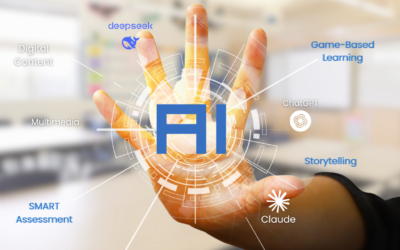
Split – The Latest Digital, ICT & AI Solutions for Educators: Transform Teaching with Technology, ChatGPT, DeepSeek, Claude, Multimedia, Storytelling, Game-Based Learning & Smart Assessment Strategies
This course is available in 7-day, 6-day, or 5-day formats. Please choose your preferred length in the preregistration form. Location: Split, Croatia Course Description...
Split – AI Safety in Education: A Teacher’s Guide to Risks, Privacy, Wellbeing and Responsible Use
Location: Split, Croatia Course Description AI is already in your students’ pockets. Tools like ChatGPT, Claude, Gemini, DeepSeek, Copilot and Snapchat’s My AI are used...


